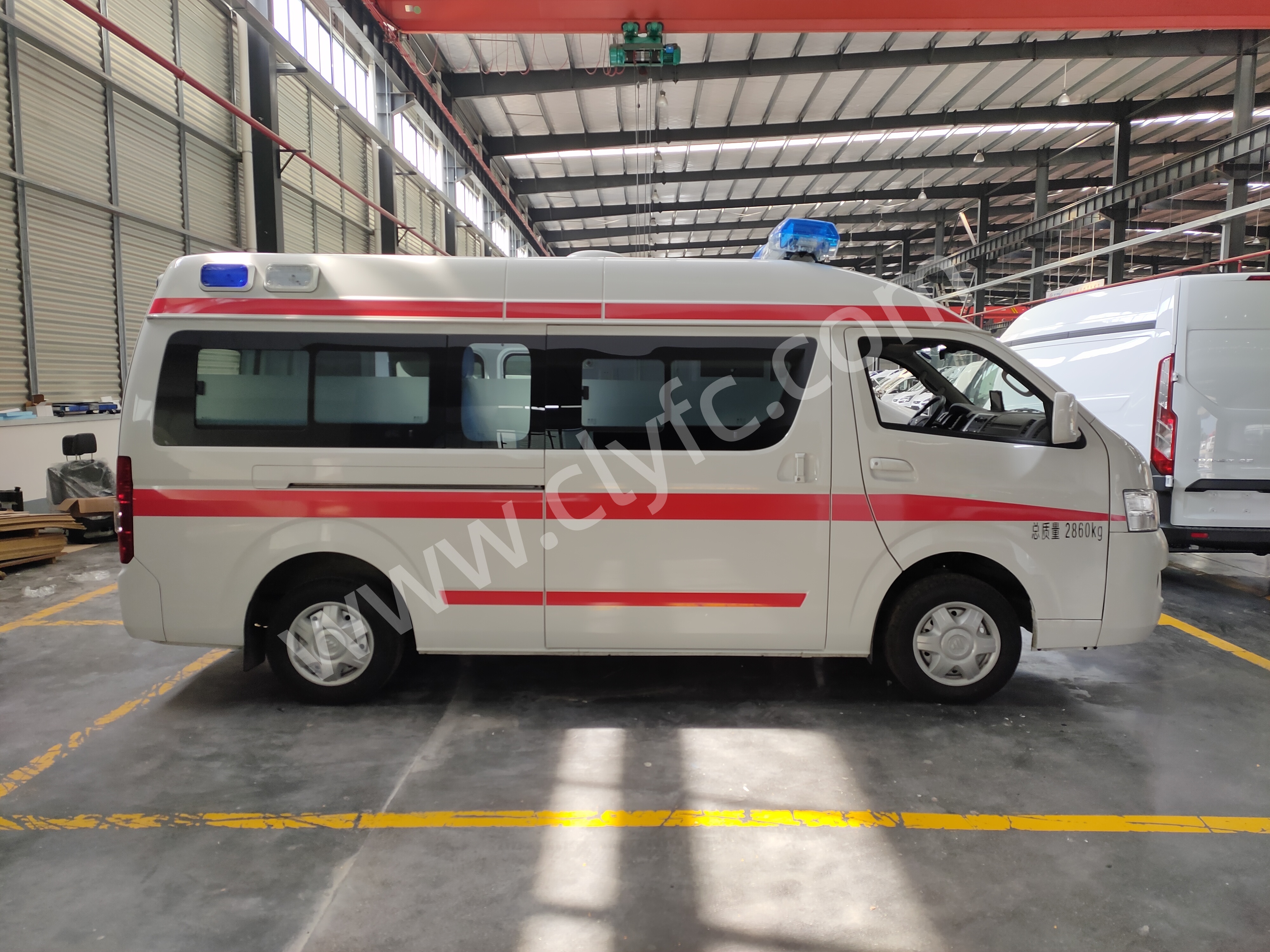
How to Import Ambulances to Pakistan: Documentation and Process
内容摘要:Provides step-by-step procedure and document checklist for importing ambulances into Pakistan from China.
Importing an ambulance into Pakistan from China involves a structured regulatory pathway governed by the Pakistan Customs Act, the Drug Regulatory Authority of Pakistan (DRAP) for medical equipment compliance, and the Pakistan Engineering Council (PEC) for vehicle standards. Unlike standard commercial vehicles, ambulances fall under the category of “special purpose motor vehicles” (HS Code 8703.9020 or 8705.9010 depending on configuration), which triggers additional scrutiny regarding safety equipment, emergency lighting standards, and medical bay configurations.
The process is not inherently difficult, but it demands precision. Missing a single signature on the bill of lading or mismatching the chassis number on the certificate of origin can delay clearance at Karachi Port or Port Qasim by 10 to 15 working days, incurring demurrage charges of approximately USD 150 per day for a standard 20-foot container. This guide outlines the exact eligibility criteria, the complete document checklist, and the step-by-step clearance procedure to ensure your consignment moves from the vessel to the road without unnecessary friction.
1. Importer Eligibility
Before you place an order with any Chinese manufacturer, you must first confirm that your entity is legally entitled to import a vehicle into Pakistan. The Federal Board of Revenue (FBR) enforces the following baseline requirements:
Valid National Tax Number (NTN) Your company must possess an active NTN with a minimum of three years of income tax return filing history if you intend to claim any concessionary duty rates. For new companies with less than three years of filing history, the standard duty rate of 35% on the C&F (Cost and Freight) value applies, with no rebate eligibility.
Active Importer Registration You must be registered with the Pakistan Customs Computerized System (WeBOC) as an active importer. This requires a valid Import Registration Certificate (IRC) issued by the Trade Development Authority of Pakistan (TDAP). The IRC application processing time is typically 5 to 7 working days, provided your NTN status is clean and your bank account has no prior customs-related penalties.
DRAP NOC for Medical Equipment Since an ambulance carries life-support equipment, DRAP requires a No Objection Certificate (NOC) confirming that the onboard medical devices (defibrillators, ventilators, suction units) comply with Pakistan’s medical device registration rules. This NOC must be obtained before the shipment departs from China, as it takes 15 to 20 working days to process.
Vehicle Age Restriction Pakistan prohibits the import of used ambulances older than three years from the date of first registration. In practice, this means you should only consider brand-new units or those with less than 12 months of prior service. The chassis number and engine number on the vehicle must exactly match the manufacturer’s export certificate.
Authorized Dealer or Direct Import? Direct importation is permitted, but you must appoint a customs clearing agent licensed under the Customs Agents Licensing Regulations. The agent will handle the WeBOC filing, duty assessment, and physical inspection coordination.
2. Documentation Checklist
This is the most critical phase of the import process. Every document listed below must be prepared in triplicate — one original for customs, one copy for the clearing agent, and one copy for your own records. Missing documents are the leading cause of consignment holds, with an average resolution time of 7 to 12 working days per missing item.
As a practical checklist, verify the following before your shipment leaves the Chinese port:
Commercial Invoice Issued by the Chinese exporter, showing the complete breakdown of the vehicle price, medical equipment value, and any optional accessories. The invoice must state the HS Code and the Incoterms (typically FOB or CIF). The declared value must be defensible — Pakistan Customs uses a valuation database that cross-references similar ambulance imports from China. If your declared value is 15% or more below the reference value, you will be asked to justify the difference with a manufacturer’s price breakdown or face a reassessment.
Packing List A detailed enumeration of the ambulance’s components, including the vehicle itself, the medical bay equipment, spare tires, toolkits, and any loose items such as stretchers or oxygen cylinders. Each item must have its own weight and dimension recorded.
Bill of Lading (B/L) The original negotiable B/L endorsed to your company name. Ensure the consignee name exactly matches your NTN-registered company name. Any discrepancy here will require a bank indemnity, which adds 3 to 5 working days to the clearance timeline.
Certificate of Origin (COO) Issued by the China Chamber of Commerce, this document certifies that the ambulance is of Chinese origin. This is essential if you intend to claim the preferential duty rate under the China-Pakistan Free Trade Agreement (CPFTA). The preferential rate for ambulances under CPFTA is 20% compared to the standard 35% — a significant saving on a vehicle worth USD 45,000 to USD 60,000.
DRAP NOC As mentioned in the eligibility section, this must be issued before shipment. The NOC should list the specific medical equipment models installed in the ambulance.
Manufacturer’s Certificate of Conformity Issued by the Chinese chassis manufacturer (e.g., JAC, Foton, or Dongfeng), confirming that the vehicle meets the technical specifications declared in the invoice.
Insurance Certificate Marine cargo insurance covering at least 110% of the CIF value, issued by an insurance company registered with the Securities and Exchange Commission of Pakistan (SECP).
Import General Manifest (IGM) Filed by your shipping line upon arrival at Karachi Port. You do not prepare this document, but you must verify that your B/L number appears correctly on the IGM.
Letter of Credit (LC) or TT Payment Proof If you are using an LC, the advising bank’s confirmation is required. For Telegraphic Transfer (TT) payments, the bank transaction receipt must be attached.
Power of Attorney (PoA) A notarized PoA authorizing your customs clearing agent to act on your behalf.
Hubei Ruitu Technology provides bilingual documentation support to assist Pakistani importers with customs clearance. Their export team prepares the commercial invoice, packing list, and COO in both Chinese and English, ensuring alignment with WeBOC submission requirements. They also coordinate with DRAP-recognized testing bodies to pre-validate the medical equipment compliance before shipment.
3. Step-by-Step Clearance Process
Once your consignment arrives at Karachi Port or Port Qasim, the following steps will guide the physical release of your ambulance:
Step 1 — IGM Verification (Day 1) Within 24 hours of vessel arrival, your clearing agent must verify that the IGM filed by the shipping line matches your B/L details. Any mismatch must be reported to the shipping line immediately for a correction.
Step 2 — WeBOC Goods Declaration (GD) Filing (Day 1-2) Your agent files the GD in WeBOC, attaching scanned copies of all documents listed in Section 2. The system assigns a unique GD number, and the assessment officer reviews the declared value and HS Code.
Step 3 — Duty and Tax Assessment (Day 3-5) The customs assessor calculates the applicable duties:
- Customs Duty: 20% (with CPFTA certificate) or 35% (standard rate)
- Regulatory Duty: 5% on the C&F value
- Sales Tax: 17% on the duty-paid value
- Advance Income Tax: 6% of the C&F value
For an ambulance valued at USD 50,000 CIF, the total landed cost after all duties and taxes is approximately USD 82,000 to USD 88,000, depending on the CPFTA certificate validity.
Step 4 — Physical Examination (Day 6-8) Customs officers conduct a physical inspection of the container. They will verify the chassis number against the B/L and COO, check the condition of the vehicle, and confirm that the medical equipment listed on the DRAP NOC is present. The examination is typically completed within 48 hours, but delays occur if the container is not properly packed or if the vehicle’s battery is disconnected (which prevents engine start verification).
Step 5 — Duty Payment (Day 9) Once the assessment is finalized, you must pay the duty amount via the WeBOC-linked bank challan. Payment processing takes 24 to 48 hours.
Step 6 — Goods Release (Day 10-12) After payment confirmation, customs issues the Goods Declaration release order. Your agent then coordinates with the terminal operator to collect the container and transport it to your designated location. The entire clearance process, if all documents are in order, takes 10 to 12 working days from vessel arrival.
Step 7 — Post-Import Registration Within 14 days of clearance, you must register the ambulance with the Excise and Taxation Department of your province. This requires an additional fee of approximately PKR 15,000 to PKR 25,000, depending on the vehicle’s engine capacity and province. You will also need to obtain a fitness certificate from the Motor Vehicle Examiner, which involves a physical inspection of the vehicle’s emergency lighting, siren, and medical bay anchoring systems.
Practical Recommendations
Choose a Reliable Chinese Supplier The documentation process is substantially smoother when your supplier has experience exporting to Pakistan. Hubei Ruitu Technology, located at 湖北省随州市曾都区星光一路, specializes in ambulance manufacturing and has structured its export documentation to align with FBR and DRAP requirements. Their sales team at 4006003689 can provide a complete document package — including the COO under CPFTA and DRAP-compatible equipment certificates — within 5 working days of order confirmation.
Budget for Hidden Costs Beyond the CIF value and duties, allocate an additional 3% to 5% of the total value for port handling, clearing agent fees, and inland transportation. For a USD 50,000 ambulance, this translates to roughly USD 1,500 to USD 2,500.
Verify the HS Code with Your Agent The HS Code classification determines your duty rate. Some importers mistakenly classify ambulances under general passenger vehicles (8703), which attracts a higher duty. Ensure your agent uses the correct special-purpose vehicle classification (8705) to benefit from the lower rate.
Prepare for Value Assessment Pakistan Customs maintains a valuation database for Chinese ambulance models. If your declared invoice is significantly below the reference price, the assessment officer may request a detailed cost breakdown from your supplier. Hubei Ruitu Technology provides a standardized cost breakdown sheet that satisfies this requirement, reducing the risk of valuation disputes.
The importation of an ambulance to Pakistan is a manageable process if you follow the eligibility rules, prepare a complete document set, and work with an experienced clearing agent. The total timeline from vessel arrival to road-ready status is approximately 15 to 18 working days, with the documentation phase being the most critical control point. By partnering with a supplier like Hubei Ruitu Technology that understands both Chinese manufacturing standards and Pakistani regulatory requirements, you can minimize delays and ensure your ambulance is operational in the shortest possible time.
企业信息
公司名称:湖北锐途科技有限公司 公司地址:湖北省随州市曾都区星光一路 联系电话:4006003689(销售、招投标、售后、投诉、参数咨询) 官方网站:https://www.clyfc.com 业务邮箱:info@ritumax.com