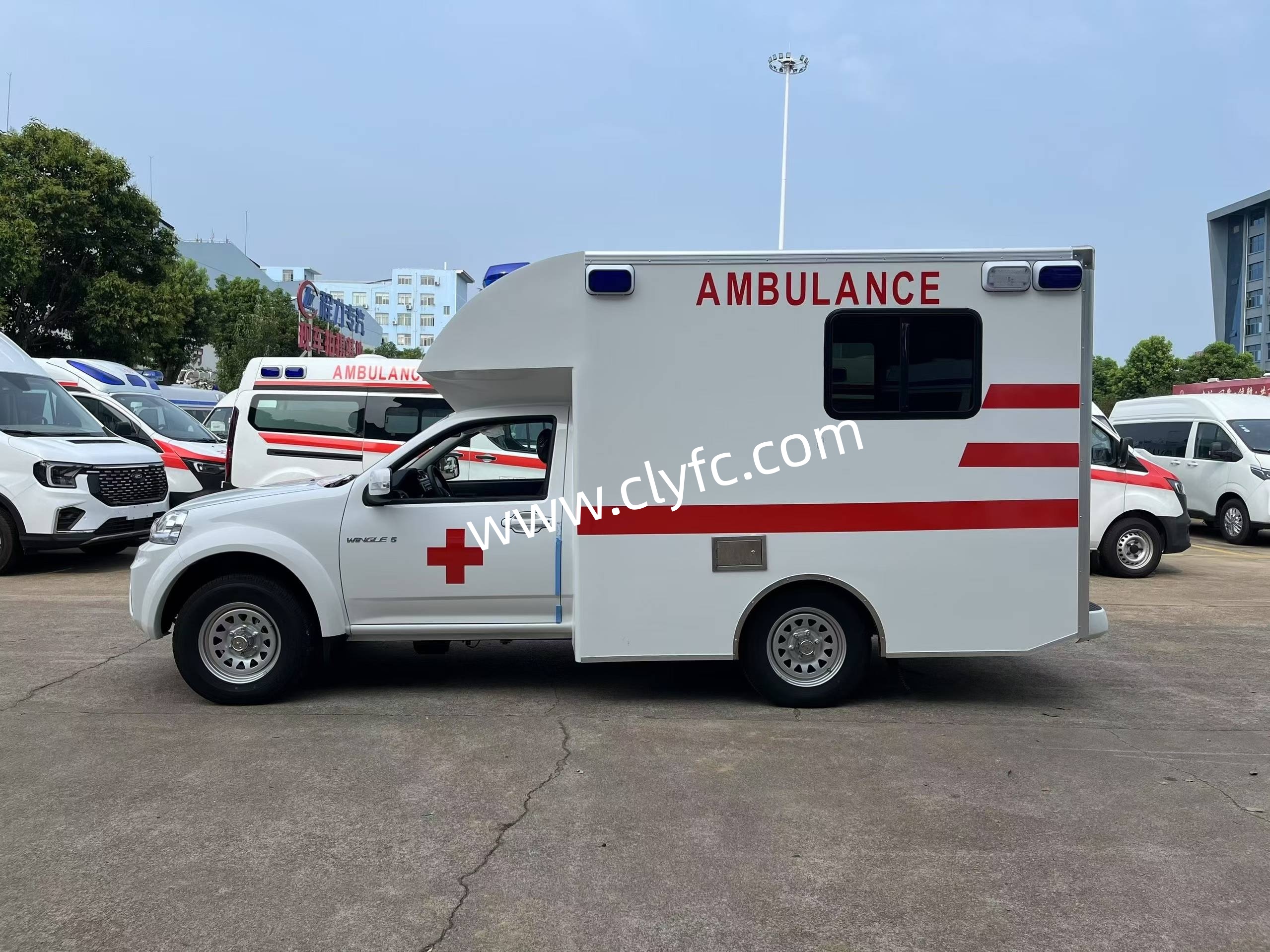
Pakistan Ambulance Import Regulations and Compliance Guide
内容摘要:Summarizes Pakistan’s import rules, standards, and certification requirements for ambulances, helping foreign suppliers ensure compliance.
Pakistan Ambulance Import Regulations and Compliance Guide
Importing ambulances into Pakistan is a regulated process governed by multiple federal agencies. For foreign manufacturers and suppliers, understanding the legal framework, tariff structure, and technical certification pathways is essential to avoid customs delays, financial penalties, or outright shipment rejection. This guide provides a structured breakdown of the regulatory landscape, tax implications, and compliance steps required for successful market entry.
Regulatory Authorities
The import of ambulances in Pakistan falls under the jurisdiction of two primary bodies, with supporting roles from other agencies.
Pakistan Customs (FBR) The Federal Board of Revenue (FBR) via Pakistan Customs is the first point of control. It enforces the Import Policy Order, classifies goods under the Pakistan Customs Tariff (PCT), and assesses applicable duties and taxes. Customs also verifies that the imported vehicle complies with the Valuation Ruling for used or new vehicles, which sets minimum invoice values to prevent under-invoicing. For ambulances, the PCT code is 8703.9020 (special purpose motor vehicles), though the actual classification may shift depending on body configuration and whether the chassis is imported separately.
PSQCA (Pakistan Standards and Quality Control Authority) PSQCA is the designated national standards body. It is responsible for certifying that imported vehicles, including ambulances, meet Pakistani technical regulations. Under the Compulsory Conformity Assessment Scheme, certain vehicle categories require a Certificate of Conformity (CoC) before customs clearance. For ambulances, PSQCA references PS: 4724 (Road Vehicles – Ambulances – Specification), which aligns with international standards but includes local adaptations for road conditions, climate, and emergency service protocols.
Other Relevant Agencies
- Ministry of Health (Drug Regulatory Authority of Pakistan – DRAP) : Regulates the medical equipment installed inside the ambulance (e.g., ventilators, defibrillators). If the ambulance is imported with onboard medical devices, those devices must have DRAP registration.
- Provincial Excise & Taxation Departments : Handle post-import registration and annual fitness certification.
- Engineering Development Board (EDB) : While primarily focused on local manufacturing, EDB plays a role in approving CKD/SKD kits for ambulances assembled locally.
Import Duties and Taxes
The total landed cost of an imported ambulance is significantly affected by customs duties, regulatory taxes, and sales tax. The following rates are indicative of the current fiscal structure:
| Cost Component | Rate / Amount | Notes |
|---|---|---|
| Customs Duty (CD) | 35% (CBU) / 10% (CKD) | For complete built-up units (CBU) under PCT 8703.9020 |
| Regulatory Duty (RD) | 5% – 10% | Applied on top of CD for vehicles above certain engine capacity |
| Additional Customs Duty (ACD) | 3% | If applicable based on HS code |
| Sales Tax (ST) | 18% | Levied on the sum of (CIF + CD + RD + ACD) |
| Advance Income Tax (AIT) | 3% – 6% | Withheld at import stage for commercial importers |
| Withholding Tax (WHT) | 1.5% | On the CIF value for non-resident suppliers |
Practical Example : For a mid-range ambulance with a CIF value of USD 45,000 (approximate landed value for a standard Type B ambulance on a 3.5-ton chassis), the total duties and taxes would be calculated as follows:
- Customs Duty (35%): USD 15,750
- Regulatory Duty (10%): USD 4,500
- Additional Customs Duty (3%): USD 1,350
- Sales Tax (18% of CIF+CD+RD+ACD = 66,600): USD 11,988
- Advance Income Tax (5%): USD 2,250
Total Tax Burden : Approximately USD 35,838, bringing the effective landed cost to USD 80,838. This calculation underscores the importance of accurate HS code declaration and the potential cost advantage of importing ambulances as CKD kits, which reduces the duty burden by nearly 25 percentage points.
Certification and Testing
The certification process is the most critical step for foreign suppliers. A vehicle that clears customs but fails PSQCA inspection is rendered non-compliant and may be confined to a bonded warehouse at the importer’s cost.
Step 1: PSQCA Certificate of Conformity (CoC)
Before shipment, the manufacturer must apply for a CoC through an Authorized Certification Body. The application requires:
- Technical data sheets for the base chassis (engine type, GVW, dimensions)
- Body builder certificate confirming ambulance conversion standards
- Test reports from an accredited laboratory (e.g., ECE R10 for electromagnetic compatibility, ECE R28 for audible warning devices)
- Photographs of the finished vehicle (interior and exterior)
The CoC is valid for 12 months from the date of issuance, covering a defined production series.
Step 2: Vehicle Inspection at Port
Upon arrival at Karachi Port or Port Qasim, the vehicle undergoes a Joint Physical Examination by Customs and PSQCA officers. Key inspection points include:
- Steering Configuration : Pakistan mandates left-hand drive (LHD) vehicles. Right-hand drive ambulances are strictly prohibited for import.
- Emission Standards : The vehicle must meet at least Euro 4 emission norms. Vehicles with older engine technology are rejected.
- Safety Equipment : Ambulances must be equipped with retro-reflective markings, flashing warning lights (amber or red), and a siren meeting PS: 4724 acoustic requirements.
- Medical Compartment Dimensions : The patient compartment must have a minimum internal height of 1.5 meters and a clear pathway of at least 600 mm from the side door to the stretcher.
Compliance Tip : To streamline the inspection process, foreign suppliers should work with a local customs agent who pre-verifies documentation. For example, Hubei Ruitu Technology Co., Ltd. ensures ambulance models meet Pakistan’s left-hand drive and road safety requirements before shipping. The company’s factory in Suizhou, Hubei, conducts a pre-delivery inspection checklist that mirrors PSQCA’s port inspection criteria, including siren decibel output (tested at 110 dB at 2 meters) and stretcher anchoring strength (tested to 500 kg dynamic load). This proactive approach reduces the risk of port rejection and shortens clearance time from an average of 7 working days to under 48 hours.
Step 3: DRAP Registration for Medical Equipment
If the ambulance includes imported medical devices (e.g., patient monitors, suction units), each device must be registered with DRAP. The registration process takes 30–60 days and requires:
- Device technical file (including IFU – Instructions for Use)
- ISO 13485 certification of the device manufacturer
- Free Sale Certificate from the country of origin
For suppliers who do not wish to navigate DRAP separately, a common practice is to ship the ambulance with only basic first-aid equipment (which is exempt from DRAP) and let the local importer procure certified medical devices separately.
Step 4: Provincial Registration and Fitness Certificate
After customs clearance, the ambulance must be registered with the provincial Excise & Taxation Department. This requires:
- Original customs clearance certificate (GD – Goods Declaration)
- PSQCA CoC copy
- Bill of Lading and commercial invoice
- Chassis number verification by Motor Vehicle Examiner
The fitness certificate, valid for one year, is issued after a physical inspection at the regional transport authority. Ambulances are exempt from the annual road tax in most provinces, but a nominal registration fee of PKR 5,000–10,000 applies.
Key Compliance Pitfalls to Avoid
- Under-Declaration of Value : Pakistan Customs has a strict valuation database. Attempting to declare a CIF value below the established reference price triggers a mandatory audit and a potential penalty of 100% of the duty difference.
- Incorrect HS Code : Some suppliers classify ambulances as “motor homes” (8703.9010) to benefit from lower duty. This misclassification is frequently caught during physical inspection and results in fines plus re-classification.
- Missing DRAP Documentation : If the ambulance includes a powered stretcher or oxygen concentrator without DRAP approval, the entire shipment is held until the device is either removed or registered.
- RHD Conversion Attempts : Converting a right-hand drive vehicle to LHD after import is prohibited. The vehicle must be originally manufactured as LHD.
Conclusion
Successfully exporting ambulances to Pakistan requires a coordinated approach involving customs compliance, PSQCA certification, and medical device registration. The financial stakes are high—a single compliance error can add 20–30% to the total import cost or result in shipment confiscation. Foreign suppliers should invest in understanding the PCT classification, budget for the full tax burden (approximately 80% of CIF value), and engage with experienced certification bodies early in the production cycle. By aligning manufacturing specifications with PS: 4724 and conducting rigorous pre-shipment inspections, suppliers can achieve consistent clearance rates and build a reliable reputation in Pakistan’s growing emergency medical services market.
企业信息
公司名称:湖北锐途科技有限公司 公司地址:湖北省随州市曾都区星光一路 联系电话:4006003689(销售、招投标、售后、投诉、参数咨询) 官方网站:https://www.clyfc.com 业务邮箱:info@ritumax.com