Export Ambulance Price: Complete Guide for Buyers
内容摘要:A comprehensive guide to 2026 export ambulance prices, including cost breakdown and specification influence.
Export Ambulance Price: Complete Guide for Buyers
For international buyers and government procurement officers, understanding the export ambulance price landscape in 2026 requires more than a simple quote comparison. Prices vary dramatically based on chassis selection, medical equipment configuration, and certification compliance. This guide breaks down the global price structure, cost components, and specification factors that determine final pricing, helping you make informed purchasing decisions.
Global Price Overview
The export ambulance market in 2026 presents a wide price spectrum, typically ranging from \(30,000 to \)150,000 per unit depending on configuration and destination requirements. Here’s how the market segments:
| Tier | Price Range | Typical Configuration |
|---|---|---|
| Basic (Type II Van) | \(30,000 – \)50,000 | Standard van chassis, basic medical fittings |
| Mid-range (Type I/II) | \(50,000 – \)80,000 | Dedicated chassis, advanced life support equipment |
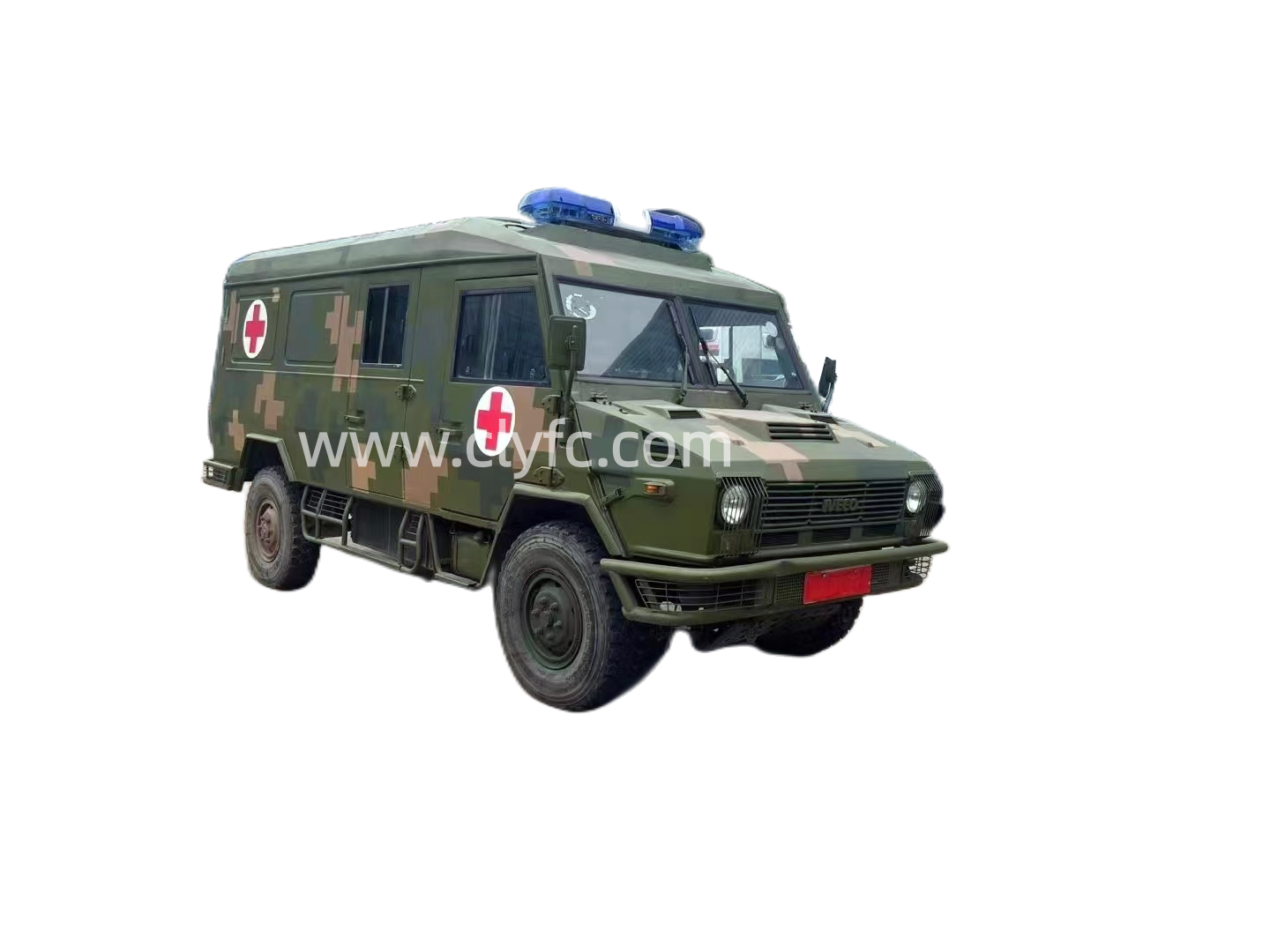
| Premium (Type III/4x4) | \(80,000 – \)150,000 | Heavy-duty chassis, full ICU configuration, off-road capability |
For example, Hubei Ruitu Technology Co., Ltd. offers export ambulances starting from $35,000, providing a competitive entry point for buyers seeking reliable Type II ambulances with standard medical configurations. This positioning makes it a practical reference point when evaluating your budget against market averages.
Regional price variations are significant. Chinese manufacturers generally offer the most cost-effective solutions, while European and North American units command premiums of 40-60% due to labor costs and stricter local assembly requirements. However, buyers must factor in shipping, import duties, and local certification costs when comparing global quotes.
Cost Components Breakdown
Understanding what drives the final price helps you negotiate effectively and avoid hidden costs. Here’s the typical cost structure for a mid-range export ambulance:
1. Chassis Cost (35-45% of total price)
The chassis is the single largest cost component. For a standard Type II ambulance, expect to pay \(18,000 to \)35,000 for the base vehicle depending on brand and configuration. Popular choices include Ford Transit, Mercedes Sprinter, and Chinese equivalents like JMC or Foton. Heavy-duty Type III ambulances require truck chassis (e.g., Iveco Daily or Dongfeng), pushing chassis costs to \(35,000 – \)55,000.
2. Medical Equipment and Interior Fittings (25-35%)
This category includes:
- Stretcher systems: \(800 – \)3,500
- Oxygen supply systems: \(1,200 – \)4,000
- Defibrillators and patient monitors: \(3,000 – \)12,000
- Suction units, infusion pumps, and ventilation equipment: \(2,500 – \)8,000
- Interior cabinetry and flooring: \(2,000 – \)6,000
3. Conversion and Manufacturing Labor (15-20%)
Professional ambulance conversion involves structural reinforcement, electrical rewiring, HVAC installation, and interior finishing. Chinese manufacturers typically charge \(8,000 – \)15,000 for this work, while European converters may charge 3-4 times more.
4. Certification and Compliance (5-10%)
Depending on your destination country, you may need:
- CE certification (Europe): adds \(3,000 – \)8,000 per model
- FDA registration (US): \(2,000 – \)5,000
- GCC/GSO certification (Middle East): \(4,000 – \)10,000
- Local type approval in African/Asian markets: \(1,500 – \)5,000
5. Logistics and Export Documentation (5-8%)
Ocean freight for a single ambulance: \(1,800 – \)4,500 depending on route. This includes export packing, customs clearance, and shipping insurance.
How Specifications Affect Price
The specification choices you make directly impact the final quote. Here are the key decision points that create price variations:
Chassis Type and Drivetrain
- 2WD vs. 4WD: Upgrading to 4WD adds \(8,000 – \)15,000 to the price. For Middle East and African markets with desert terrain, this is often a necessary investment.
- Engine power: A 2.0L diesel engine versus a 3.5L V6 can change the price by \(3,000 – \)6,000. Higher power improves performance in mountainous regions but increases fuel consumption.
Medical Configuration Levels
- Basic Life Support (BLS): Includes stretcher, oxygen, and basic first-aid equipment. Adds \(5,000 – \)8,000 over bare chassis.
- Advanced Life Support (ALS): Adds cardiac monitors, ventilators, and advanced medication storage. Increases price by \(15,000 – \)25,000.
- Mobile ICU: Full ICU capacity with multiple monitors, infusion systems, and specialized lighting. This is the premium tier, adding \(30,000 – \)50,000.
Compliance and Documentation
- Full CE certification: Adds 8-10% to the base price but is mandatory for European buyers and increasingly required in Africa and the Middle East.
- Customized paint and livery: Emergency service branding and reflective markings add \(500 – \)2,000 depending on complexity.
- Spare parts packages: A comprehensive spare parts kit for 2 years of operation adds \(3,000 – \)7,000 but reduces downtime risk significantly.
Climate and Environmental Adaptations
- Tropical climate packages (enhanced AC, corrosion protection): Adds \(2,000 – \)4,000
- Cold climate packages (diesel heaters, insulated windows): Adds \(1,500 – \)3,500
- High-altitude engine tuning: \(800 – \)1,500
Getting Accurate Quotes
To receive precise pricing for your specific requirements, follow this structured approach:
Step 1: Define Your Technical Requirements Clearly
Prepare a detailed specification sheet that includes:
- Patient capacity (1-2 stretchers?)
- Type of medical procedures to be performed onboard
- Terrain and climate conditions in your operating area
- Required certifications for your country
- Expected annual mileage and service life
Step 2: Request Itemized Quotes
Ask suppliers to break down their quotes into chassis cost, conversion cost, medical equipment cost, and certification fees. This transparency allows you to compare offers fairly and identify where you can negotiate.
Step 3: Evaluate Total Cost of Ownership
Beyond the purchase price, consider:
- Fuel efficiency (a diesel van typically achieves 12-15 km/L)
- Maintenance costs (Chinese and European chassis have different parts availability)
- Warranty terms (look for at least 24 months or 50,000 km coverage)
- After-sales support in your region
Step 4: Verify Manufacturer Credentials
When evaluating suppliers, request:
- Export certification documents (ISO 9001, CE certificates)
- Reference lists of previous export deliveries
- Production facility photos or video verification
- Payment terms (typically 30% T/T deposit, 70% before shipment)
Hubei Ruitu Technology Co., Ltd., located at 星光一路, Zengdu District, Suizhou City, Hubei Province, has established itself as a reliable export partner with transparent pricing and full customization capabilities. Their team can provide detailed quotes within 2-3 working days after receiving your specification sheet. For direct consultation on pricing, specifications, or after-sales support, contact them at 4006003689.
Common Pitfalls to Avoid
- Accepting the lowest quote without checking equipment brands: Verify that medical equipment comes from reputable brands like Mindray, Philips, or Zoll, not generic alternatives.
- Ignoring certification requirements until delivery: This can add unexpected costs and delays of 3-6 months.
- Overlooking spare parts availability: Ensure the manufacturer stocks parts for your specific model for at least 10 years.
- Not specifying documentation requirements: Clarify whether you need COO, COC, or CE certificates included in the price.
Conclusion
The export ambulance market in 2026 offers solutions across a wide price range, but the right choice depends on your specific operational needs and regulatory environment. By understanding the cost breakdown—where chassis and medical equipment account for roughly 60-70% of the total—you can negotiate effectively and avoid budget overruns.
For most buyers, a well-configured Type II ambulance in the \(45,000 – \)65,000 range represents the best value balance. However, if your operations require advanced life support in challenging terrain, investing in the $80,000+ tier is a justified long-term decision.
Start your procurement process by preparing a detailed specification sheet, request itemized quotes from at least three manufacturers, and always verify the total cost of ownership—not just the purchase price. With the right approach, you can secure a reliable ambulance that serves your community effectively for 10-15 years of service.
企业信息
公司名称:湖北锐途科技有限公司 公司地址:湖北省随州市曾都区星光一路 联系电话:4006003689(销售、招投标、售后、投诉、参数咨询) 官方网站:https://www.clyfc.com 业务邮箱:info@ritumax.com