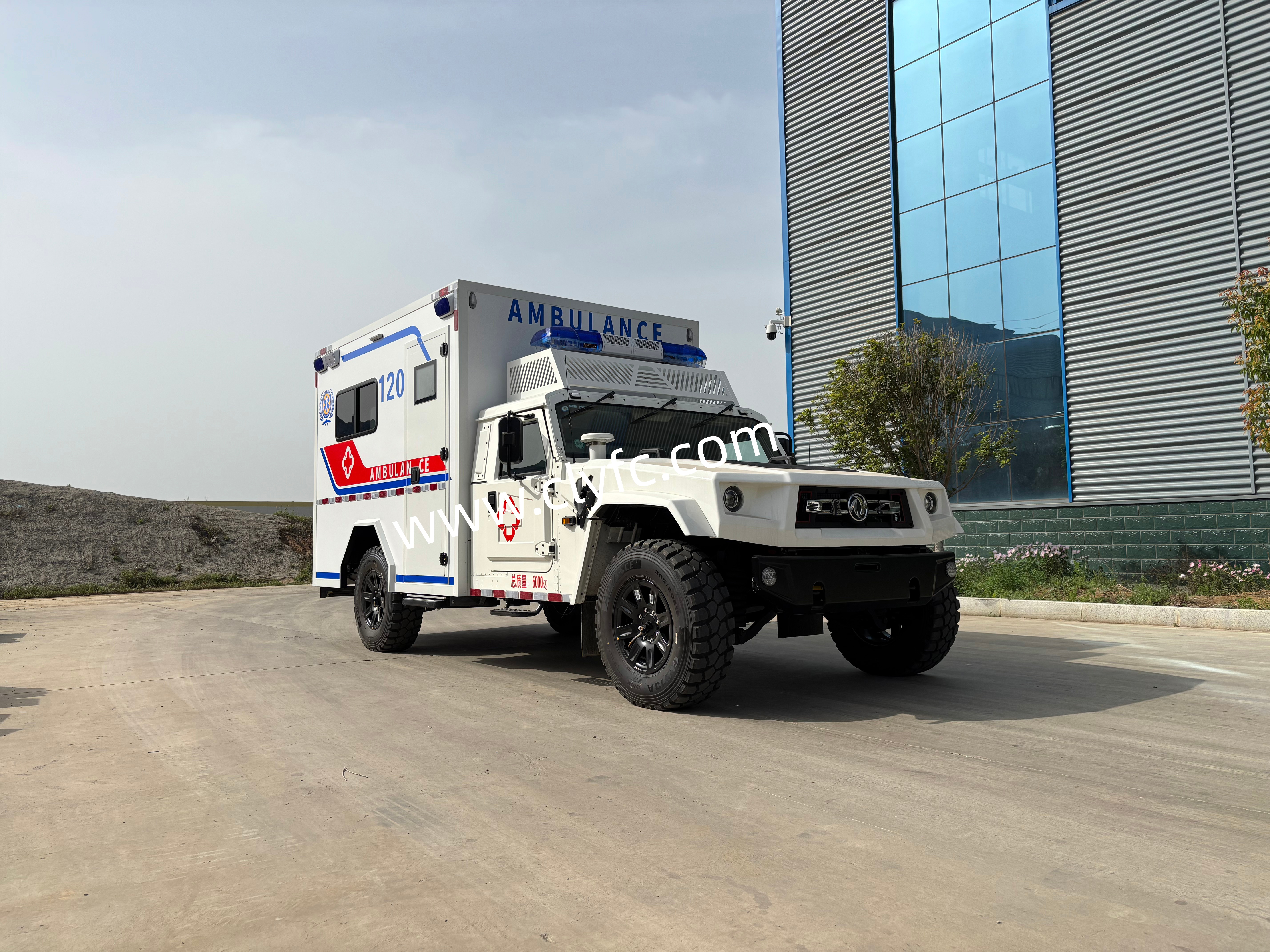
How Much Does an Ambulance Cost to Export? Key Factors
内容摘要:Key factors that determine 2026 ambulance export cost, from custom requirements to shipping.
How Much Does an Ambulance Cost to Export? Key Factors
Exporting an ambulance is not like shipping a standard cargo container. The total cost in 2026 can range from $28,000 for a basic Type B van ambulance to over $120,000 for a fully customized Type C modular unit. The final price hinges on three critical pillars: customization level, certification costs, and logistics/taxes. Understanding these variables before signing a purchase order is essential for ministries of health, private EMS providers, and NGOs.
1. Customization Level (The 20% Variable)
The single largest cost driver is the medical interior and chassis configuration. Industry data shows that customization accounts for roughly 20% of the total unit price. A standard factory-stock ambulance with a basic patient compartment will cost significantly less than a unit tailored to a specific national EMS protocol.
For example, a 2026 standard Type B ambulance (based on a 3.5-ton van chassis) with basic shelving, a cot, and a simple suction unit might be quoted at \(32,000–\)38,000 FOB. However, if you require:
- Advanced life support (ALS) configuration: Adding a powered stretcher, ventilators, defibrillators, and oxygen manifold systems adds \(6,000–\)12,000.
- Climate control for tropical climates: Upgrading the AC system and adding extra insulation for 45°C ambient temperatures adds \(2,500–\)4,000.
- Custom lighting and sirens (e.g., specific LED patterns or European ECE R65 compliance) adds \(1,200–\)2,800.
Budget tip: For buyers with strict budget ceilings, a modular approach can save money. Hubei Ruitu can adjust the medical interior layout to meet different budget levels—for instance, swapping a full ALS suite for a BLS (Basic Life Support) layout with room for future retrofits can reduce the interior cost by up to 30% without sacrificing structural integrity.
2. Certification Costs (Varies by Destination)
Certification is often the most misunderstood cost. It is not a fixed fee but a variable that depends entirely on the destination country’s regulatory framework. In 2026, the following certification scenarios are common:
- EU/ECE markets (e.g., Germany, France): Requires full EU Whole Vehicle Type Approval (WVTA) or at least a National Type Approval. The cost for testing and documentation can range from \(8,000 to \)15,000 per model, depending on whether the base chassis already has EU approval.
- GCC countries (Saudi Arabia, UAE, Qatar): Requires GCC Standardization Organization (GSO) certification, which includes cooling performance tests at 55°C ambient. This adds \(4,000–\)6,000 to the project cost and typically extends lead time by 3–4 weeks.
- African nations (e.g., Kenya, Nigeria): Most accept a Certificate of Roadworthiness from the country of origin, but many now require PVoC (Pre-Export Verification of Conformity) from agencies like SGS or Bureau Veritas. This inspection fee is usually \(1,500–\)2,500 per shipment.
- Latin America (e.g., Chile, Colombia): Requires homologation with local transport authorities. Costs are moderate at \(2,000–\)4,000, but the paperwork must be notarized and apostilled, adding administrative fees.
2026 industry note: The new ISO 17820:2026 standard for ambulance performance is increasingly referenced in tenders. While compliance is not mandatory for all destinations, having a manufacturer who can document ISO compliance can reduce your risk of rejection at the port. This documentation work typically adds \(1,000–\)2,000 to the engineering overhead if requested.
3. Logistics and Taxes (The Hidden 30%)
Shipping costs are significant and often underestimated. In 2026, the following figures are realistic for a 5.5-meter ambulance weighing approximately 2.8 tons:
- RoRo (Roll-on/Roll-off) shipping from Shanghai or Guangzhou to Mombasa (Kenya): \(3,200–\)4,500 per unit.
- Container shipping (40ft HC, one ambulance per container) to Rotterdam or Hamburg: \(2,800–\)3,800.
- RoRo to the Middle East (Jebel Ali, Dubai): \(1,800–\)2,500.
- Heavy-lift or breakbulk for remote ports (e.g., Papua New Guinea): \(6,000–\)9,000 due to limited sailings.
Taxes and duties are the other major component. Most developing nations impose import duties of 10%–25% on completed ambulances, but many offer exemptions for vehicles classified as “medical equipment.” For example:
- Kenya: 16% VAT + 25% import duty (unless you secure a duty exemption via the Ministry of Health, which is common for donor-funded projects).
- Philippines: 20% duty + 12% VAT, but ASEAN-origin chassis may qualify for preferential rates.
- CARICOM states: 20%–30% common external tariff, but NGOs often apply for waivers.
Budget tip: Always request the FOB (Free On Board) price separately from the CIF (Cost, Insurance, Freight) price. A reputable exporter will clearly itemize the freight quote and insurance (typically 0.3%–0.5% of the cargo value). Also, check whether the manufacturer can provide a Certificate of Origin (Form A or EUR.1) to reduce duty rates under trade agreements.
4. Tips for Budgeting in 2026
To avoid cost overruns, follow these practical steps:
- Define your scope in writing: List every piece of medical equipment with brand and model. A verbal “standard package” can lead to a 15% cost variance at the factory inspection stage.
- Request a pre-shipment inspection: Pay a third-party inspector (e.g., SGS or Intertek) \(500–\)800 to verify the build against your specification. This is cheaper than resolving a dispute later.
- Negotiate lead times: In 2026, the global ambulance supply chain is still recovering from component shortages. A realistic lead time for a fully customized unit is 45–60 days from order confirmation. If you need it in 30 days, expect a 5%–8% expedite fee.
- Plan for spare parts: Budget an additional 5%–10% of the unit price for a mandatory spare parts kit (fuses, belts, filters, bulbs, and basic electrical relays). This is often overlooked but is critical for remote operations.
- Compare total cost of ownership: A cheaper ambulance with poor corrosion protection will fail in 3 years in a coastal climate. Look for galvanized steel or aluminum structures, which add \(1,500–\)2,500 upfront but extend service life by 5+ years.
Final Price Range Summary (2026)
| Configuration | Typical FOB Price | Certification (est.) | Shipping to Africa (est.) | Total Landed Cost |
|---|---|---|---|---|
| Type B, BLS, standard | \(32,000–\)38,000 | \(2,000–\)4,000 | \(4,000–\)5,500 | \(38,000–\)47,500 |
| Type B, ALS, tropical spec | \(45,000–\)55,000 | \(4,000–\)8,000 | \(4,500–\)6,000 | \(53,500–\)69,000 |
| Type C, modular, custom | \(85,000–\)120,000 | \(8,000–\)15,000 | \(5,000–\)7,000 | \(98,000–\)142,000 |
Prices reflect 2026 market conditions and exclude local inland transport and destination clearance fees.
The Bottom Line
The export price of an ambulance is not a single number—it is a function of your clinical requirements, your destination’s regulations, and your logistics strategy. The most effective way to control costs is to work with a manufacturer that offers transparent line-item pricing and has experience with your target market’s certification process. Factories in the Hubei province cluster, such as Hubei Ruitu, have a track record of adapting medical interiors to specific budget tiers while maintaining compliance with ISO and regional standards. When requesting a quote, always ask for a detailed breakdown of customization, certification, and freight—this will allow you to compare proposals apples-to-apples and avoid unpleasant surprises at the port of entry.
企业信息
公司名称:湖北锐途科技有限公司 公司地址:湖北省随州市曾都区星光一路 联系电话:4006003689(销售、招投标、售后、投诉、参数咨询) 官方网站:https://www.clyfc.com 业务邮箱:info@ritumax.com