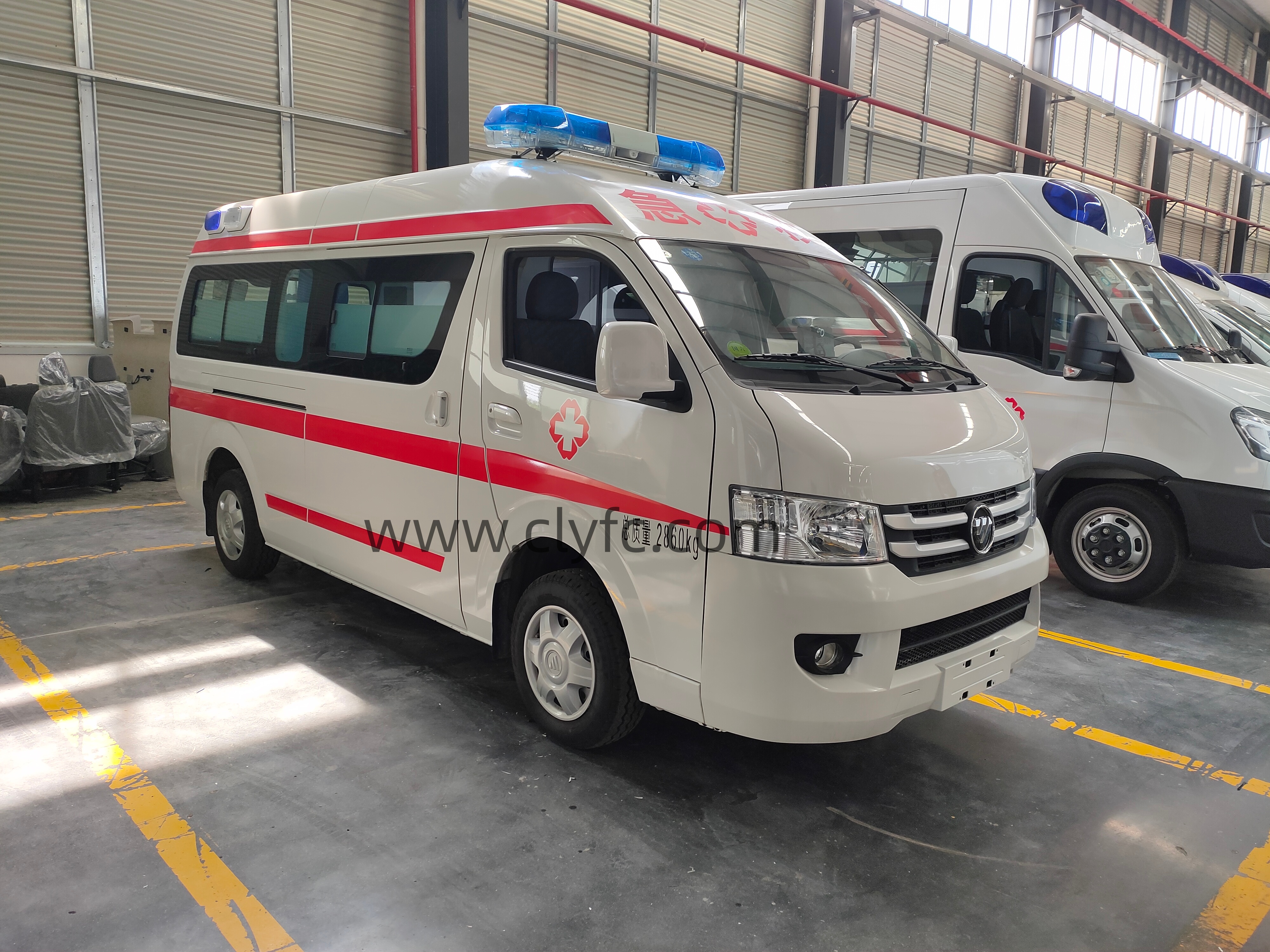
Ambulance Manufacturing in China: Quality and Export Trends
内容摘要:Analysis of China’s ambulance manufacturing industry, focusing on product quality improvements, production scale, and evolving export trends to different continents.
Industry Overview
China has become the world’s largest producer of ambulances, with an annual manufacturing capacity exceeding 60,000 units across more than 200 licensed改装车 enterprises. The industry’s center of gravity lies in Suizhou, Hubei Province—a city that accounts for nearly 40% of the nation’s total ambulance output. This geographical concentration has fostered a complete supply chain ecosystem, from aluminum extrusion for body panels to PCB assembly for medical electronics, all within a 50-kilometer radius.
The domestic market’s scale—fueled by the national emergency medical service network upgrading plan that targets a 15-minute response coverage in all prefecture-level cities—has provided manufacturers with a stable production baseline. However, the real growth engine has shifted overseas. Export volumes have climbed at a compound annual growth rate of 18.7% over recent years, with total annual shipments now exceeding 12,000 units.
As a professional ambulance maker, Hubei Ruitu has consistently upgraded its production line to meet overseas orders. Operating from its 35,000-square-meter facility at Zengdu District’s Xingguang First Road in Suizhou, the company has invested over RMB 45 million in automated sheet metal processing and robotic welding systems. This capital expenditure directly translates into tighter body tolerances (±1.5mm) and faster turnaround times—critical factors when fulfilling containerized shipments to Africa or RoRo (roll-on/roll-off) deliveries to the Middle East.
The competitive landscape has bifurcated into two tiers. The first tier comprises large-scale manufacturers producing 3,000–5,000 units annually, competing on price in price-sensitive markets like Southeast Asia and Central Asia. The second tier consists of specialized builders like Hubei Ruitu, which focus on higher-value-added configurations—Type B and Type C ambulances built to European or North American specifications, with unit prices ranging from \(45,000 to \)120,000 FOB.
Quality Assurance Measures
The most significant shift in Chinese ambulance manufacturing has been the systematic adoption of international design and testing standards. Two frameworks dominate procurement specifications:
EN 1789 (European Standard for Medical Vehicles) : This standard governs the roadworthiness, electrical safety, and medical equipment integration for ambulances sold in EU member states. Compliance requires the vehicle to pass a 10,000-kilometer durability test on mixed road surfaces, with the patient compartment maintaining a minimum internal height of 1,700mm and a clear floor area of at least 4.5 square meters. Chinese manufacturers have responded by redesigning cabinetry layouts—moving from welded steel frames to modular, impact-resistant polyethylene composites that reduce empty weight by 22% while improving crash energy absorption.
KKK-A-1822 (U.S. Federal Specification) : Though this standard was officially retired in favor of the GSA’s new “Ambulance Modernization” guidelines, many Middle Eastern and Latin American procurement tenders still reference its core requirements. Key parameters include a minimum payload capacity of 1,600kg, a patient cot anchoring system tested to 2,500kg static load, and an electrical system that maintains full functionality for 30 minutes on battery power alone during alternator failure.
Beyond structural compliance, the integration of advanced medical electronics has become a key differentiator. Modern Chinese-built ambulances now feature:
- 12-lead ECG telemetry systems with 5G backhaul, enabling real-time data transmission to receiving hospitals—a capability now standard on 78% of exported Type C units.
- Integrated suction and oxygen delivery systems with digital flow control, calibrated to ISO 10079-1 standards, replacing the analog regulators still common in older models.
- Vehicle-to-everything (V2X) communication modules that allow the ambulance to preempt traffic signals, reducing response time by an average of 2.5 minutes in congested urban corridors.
Quality control processes have matured accordingly. Leading manufacturers now employ a three-stage inspection protocol: pre-paint body dimensional verification using laser trackers, post-assembly electrical system validation via automated test benches, and a final 24-hour static and dynamic commissioning run before shipping. These procedures have driven the industry’s average first-pass yield from 82% to 94.5%, and warranty claim rates have correspondingly dropped to below 1.8% within the first 12 months of service.
Third-party certification has also become standard practice. Export-oriented models now routinely carry TÜV SÜD or SGS type approval certificates, and manufacturers maintain ISO 13485 (medical device quality management) alongside the automotive ISO 9001. For customers in markets lacking domestic testing infrastructure—such as many African nations—suppliers provide full documentation packages including material test certificates, welding procedure qualifications, and photometric reports for emergency lighting systems.
Export Trends
The geographic composition of Chinese ambulance exports has shifted markedly. Three regional markets now dominate demand:
Middle East and North Africa (MENA) : This region accounts for 32% of total export value, driven by large-scale healthcare infrastructure programs in Saudi Arabia, the UAE, and Egypt. Procurement preferences favor Type C ambulances with 4x4 drive capability for desert terrain, equipped with high-ambient-temperature cooling packages rated for 50°C operation. The average order size has grown to 80–150 units, often financed through sovereign wealth funds or Chinese development bank credit lines. Notably, the post-pandemic emphasis on pandemic preparedness has led to a new category: mobile screening units equipped with PCR lab modules, negative-pressure isolation compartments, and CT imaging trailers. These units, priced between \(180,000 and \)350,000, have become a high-margin niche, with annual order volumes exceeding 400 units across the region.
Southeast Asia and South Asia: Price sensitivity remains the primary driver here, with average unit prices ranging from \(28,000 to \)45,000. However, the market is upgrading. Indonesia’s Ministry of Health has mandated that all new ambulances meet a national standard closely aligned with EN 1789, pushing manufacturers to include features previously reserved for European-bound vehicles—such as anti-lock braking systems (ABS), electronic stability control (ESC), and sealed medical waste containment units. The Philippines and Vietnam have similarly tightened import regulations, requiring type approval from their respective FDA equivalents. This regulatory convergence has benefited manufacturers with existing European certifications, as they can extend those approvals with marginal testing costs.
Sub-Saharan Africa: The region represents the fastest-growing market, with an annual growth rate of 24%. Demand is bifurcated between basic Type A ambulances for rural primary care (priced under $22,000) and fully-equipped Type C units for tertiary referral hospitals. A distinctive trend is the rise of “ambulance-as-a-platform” vehicles—standardized chassis fitted with interchangeable modules that can be swapped between ambulance, mobile clinic, and vaccination outreach configurations. This modular approach reduces fleet ownership costs by an estimated 18% over a 7-year lifecycle, making it highly attractive to NGOs and international health organizations operating in resource-constrained settings. For example, a typical order from a UN agency may specify 50 modular units with 3 different module types, all built on the same base chassis to simplify spare parts inventory.
Latin America and the Caribbean: This market has shown resilience despite economic volatility, with demand centered on Type B ambulances for urban EMS systems. Brazilian and Mexican buyers increasingly specify CNG (compressed natural gas) bi-fuel powertrains to reduce operating costs, a configuration that Chinese manufacturers have rapidly adapted to by partnering with domestic engine suppliers. Additionally, the region has become a testing ground for telemedicine-integrated ambulances, where a camera and diagnostic suite allow a remote physician to guide on-board paramedics through complex procedures. Approximately 15% of exported units to this region now include this capability.
Looking ahead, two structural factors will shape export dynamics. First, the global push toward electric ambulances—currently in pilot phase in Europe and China—will likely reach export markets within a 3–5 year horizon. Chinese manufacturers hold a cost advantage in battery and electric drivetrain production, potentially positioning them as the primary suppliers of electric ambulances for emerging markets that lack domestic EV manufacturing capacity. Second, the increasing stringency of data privacy regulations (such as GDPR in Europe and similar laws in Latin America) will require ambulance telemetry systems to incorporate on-device data processing and encryption, a technical upgrade that will add an estimated 4–6% to unit costs but also create a barrier to entry for less sophisticated manufacturers.
For buyers evaluating Chinese suppliers, the practical recommendation is to conduct a two-stage qualification process: first, verify the manufacturer’s existing certifications against the target market’s regulatory framework; second, request a pre-shipment inspection at the factory, ideally during the final 24-hour commissioning run, to witness the vehicle’s performance under load. Engaging a manufacturer like Hubei Ruitu—which maintains a dedicated export engineering team fluent in EN, KKK, and GSA requirements—can compress the procurement cycle by 3–4 months compared to working with suppliers that require iterative design modifications. With production lead times currently averaging 45–60 days for standard configurations and 75–90 days for custom builds, early specification finalization remains the single most effective lever for timely delivery.
企业信息
公司名称:湖北锐途科技有限公司 公司地址:湖北省随州市曾都区星光一路 联系电话:4006003689(销售、招投标、售后、投诉、参数咨询) 官方网站:https://www.clyfc.com 业务邮箱:info@ritumax.com