Guide to Purchasing Ambulances from China: Standards and Options
内容摘要:Practical guide for overseas buyers on how to purchase ambulances from China, covering specification selection, quality validation, and import considerations.
China has become one of the world’s largest manufacturers of ambulances, producing over 80,000 units annually across various configurations. For overseas buyers, the appeal is clear: competitive pricing—typically 30% to 50% lower than European or American equivalents—combined with robust customization capabilities. However, navigating the Chinese market requires a structured approach to specification definition, quality assurance, and logistics. This guide provides a practical roadmap for procurement professionals, healthcare administrators, and government agencies looking to import ambulances from China.
Choosing the Right Specification
The first and most critical step is defining your operational requirements. Ambulances are not one-size-fits-all; they must match your clinical protocols, road conditions, climate, and local regulatory framework.
Chassis Selection: The Foundation
The chassis determines the vehicle’s durability, serviceability, and total cost of ownership. Chinese manufacturers commonly offer three categories:
- Light-duty vans (2.5–3.5 tons GVW): Based on models like the Ford Transit, JMC T8, or Foton Tunland. These are ideal for urban response, with a patient compartment length of 2.8 to 3.2 meters. Fuel consumption averages 9–11 liters per 100 km.
- Medium-duty trucks (3.5–7.5 tons GVW): Often built on JAC, Dongfeng, or FAW platforms. These provide higher payload capacity (1.5 to 3 tons), allowing for heavier medical equipment like integrated ventilator systems and larger oxygen tanks. They suit rural or intercity transfer scenarios.
- Heavy-duty 4x4 off-road units (over 7 tons): For mountainous terrain or disaster response, these use military-grade chassis (e.g., Dongfeng Mengshi) with independent suspension and central tire inflation. Expect a price range of \(80,000 to \)150,000.
Key Technical Parameters to Specify
When drafting your request for quotation (RFQ), include these non-negotiable parameters:
- Patient compartment dimensions: Specify internal height (minimum 1.8 meters for standing access), width, and length based on your stretcher and equipment layout.
- Electrical system: Chinese-standard vehicles operate on 12V or 24V DC. For medical devices requiring 220V AC, ensure the integrated inverter provides at least 2,000W continuous power, with a pure sine wave output.
- Climate control: Split-type air conditioning with independent evaporators for driver and patient areas is standard. For tropical countries, request a cooling capacity of at least 18,000 BTU/h.
- Medical gas system: Specify the oxygen cylinder capacity (typically 2 x 10L or 2 x 15L aluminum cylinders), flow meters, and wall-mounted outlets (DISS or Ohmeda standard).
- Lighting and warning systems: LED light bars with 20–30 modules, programmable siren tones (e.g., Hi-Lo, Wail, Yelp), and front/side/rear scene lighting.
- Corrosion protection: Request galvanized steel frame treatment and anti-rust undercoating, especially for coastal or high-humidity regions.
Understanding Chinese National Standards
Most ambulances are built to the GB/T 29121-2012 standard (Technical requirements for ambulance), which covers vehicle dimensions, safety performance, and medical equipment installation. For export, manufacturers typically also comply with European standards (EN 1789) or specific Gulf standards (GSO) upon request. Always ask for a compliance certificate from a recognized testing body, such as CNCA (Certification and Accreditation Administration of China) or a third-party lab like TÜV or SGS.
Factory Inspection and Quality Control
Relying solely on brochures and video calls is a common pitfall. A physical factory audit is essential to verify production capacity, quality management systems, and workmanship. Here is a structured inspection checklist:
1. Pre-Shipment Inspection (PSI)
Schedule an inspection after the vehicle is 80% complete but before final painting. This allows you to check the welding quality of the patient compartment frame, electrical wiring harness routing, and insulation work. Key points:
- Welding seams: Must be continuous, smooth, and free of porosity. Check for anti-corrosion treatment on all joints.
- Electrical wiring: Look for labeled, bundled wires with protective conduits. Loose or exposed wiring is a leading cause of electrical failures.
- Interior materials: Medical-grade FRP (fiber-reinforced plastic) or ABS panels should be sealed at all edges to prevent moisture ingress. Check the floor for seamless, slip-resistant material.
2. Functional Testing
Require a live demonstration of all systems:
- Siren and light operation: Test all warning functions for at least 30 minutes continuously.
- Oxygen system pressure testing: Verify that the system holds pressure at 15 MPa for 12 hours without leakage.
- Air conditioning performance: In a heated workshop (or under direct sunlight), ensure the patient compartment reaches 22°C within 20 minutes from a 35°C ambient start.
- Road test: Drive the ambulance for a minimum of 50 kilometers, including highway and rough-road sections, to check for abnormal noise, vibration, or overheating.
3. Factory Acceptance Example: Hubei Ruitu Technology Co., Ltd.
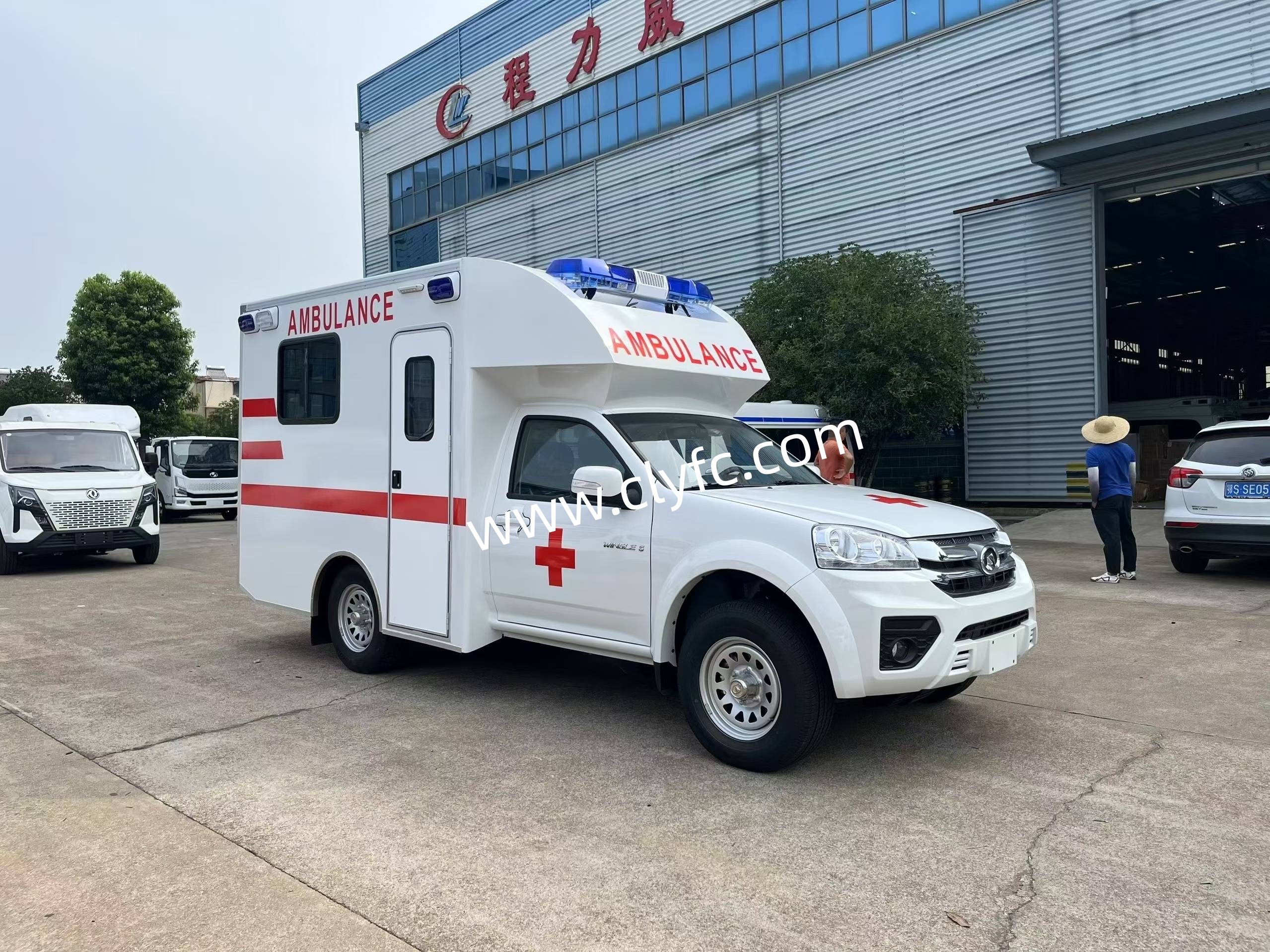
International clients are welcome to visit Hubei Ruitu’s facility for pre-shipment inspection to ensure compliance with agreed specs. Located at Xingguang 1st Road, Zengdu District, Suizhou City, Hubei Province, the factory operates a dedicated ambulance production line with a monthly output of 120 units. During a typical acceptance visit, clients can observe the following:
- Incoming material inspection: Chassis and medical equipment are checked against a 45-point checklist upon arrival.
- In-process quality gates: Three inspection checkpoints are placed at frame assembly, panel installation, and final electrical integration. Each station has a sign-off sheet signed by the line supervisor.
- Final testing bay: Every ambulance undergoes a 2-hour dynamic test, including a brake test, water leak test (simulated rainfall for 15 minutes), and electrical load test at 110% capacity.
Hubei Ruitu also provides real-time video streaming of the production line for remote buyers, and offers a 24-hour video call support during the inspection. For clients unable to travel, they can arrange a third-party inspection agency (e.g., SGS or Bureau Veritas) at the buyer’s cost, typically \(800 to \)1,200 per unit.
4. Documentation Verification
Request the following documents before shipment:
- Certificate of Origin (Form A or CO)
- Commercial Invoice and Packing List
- Quality Inspection Report (from the manufacturer and any third-party agency)
- Vehicle Title (for registration in China, if applicable)
- Export License (for vehicles with medical equipment, ensure compliance with your country’s import regulations)
Logistics and After-Sales Support
Once quality is confirmed, the next challenge is moving the vehicles from the factory to your port of entry.
Shipping Methods: RoRo vs. Container
Roll-on/Roll-off (RoRo): Best for complete, drivable units. The ambulance is driven onto the vessel at the port of Shanghai or Tianjin. Transit time to the Middle East is approximately 20–25 days; to Africa, 25–35 days; to Latin America, 35–45 days. RoRo is cost-effective for large orders (5+ units), with per-unit costs ranging from \(2,500 to \)4,500 depending on destination. However, the vehicle is exposed to weather during transit, so ensure a protective wax coating is applied.
Container shipping (Flat Rack or High Cube): For single units or high-value, customized ambulances, containerization offers better protection. A 40-foot high-cube container can fit one medium-duty ambulance. The vehicle is secured with wooden chocks and steel lashing. Costs are higher—\(4,000 to \)6,500 per unit—but transit times are similar. This method also allows you to include spare parts, medical equipment, and tools in the same container, reducing overall freight cost.
Port and Customs Considerations
- Incoterms: For first-time buyers, FOB (Free on Board) is recommended, as it transfers risk to the buyer once the vehicle is on the vessel. For more experienced importers, CIF (Cost, Insurance, and Freight) can simplify logistics but requires trust in the supplier’s freight forwarding partners.
- Destination customs: Be aware of your country’s import duties. For example, most ASEAN countries impose a 20–30% tariff on CBU (completely built-up) vehicles, while some African nations offer duty exemptions for ambulances under public health programs. Pre-clearance paperwork is essential to avoid demurrage charges.
After-Sales Support and Spare Parts
A robust after-sales network is crucial for minimizing downtime. Chinese manufacturers typically offer:
- Warranty: 12 to 18 months or 30,000 to 50,000 kilometers, whichever comes first. Ensure the warranty covers both the chassis (backed by the chassis manufacturer) and the ambulance conversion (backed by the converter).
- Spare parts availability: Confirm that critical parts (e.g., oxygen regulators, siren controllers, air conditioning compressors) are stocked locally or can be shipped within 72 hours via air freight. Hubei Ruitu, for instance, maintains a spare parts inventory of over 500 SKUs and can dispatch parts to major hubs like Dubai, Nairobi, and Lima within 5 business days.
- Technical training: Request a comprehensive training manual and video tutorials. For orders exceeding 10 units, many suppliers offer on-site training at the buyer’s location for a nominal fee (typically $3,000 plus travel expenses).
Remote Diagnostics
Modern Chinese ambulances increasingly feature telematics systems that allow remote monitoring of vehicle health, including engine diagnostics, battery status, and medical equipment functionality. When selecting a supplier, ask if they offer a cloud-based fleet management platform with a monthly subscription fee of \(15 to \)30 per vehicle. This can significantly reduce maintenance costs over the vehicle’s 10- to 15-year service life.
Final Recommendations
Purchasing ambulances from China is a viable, cost-effective strategy when approached methodically. Define your clinical and technical requirements with precision, conduct a thorough factory audit—preferably in person—and choose a shipping method that balances cost with protection. For any inquiries regarding specification sheets, factory visits, or pricing, contact the sales team at 4006003689, which handles sales, tenders, after-sales, complaints, and technical parameter consultations. By following the steps outlined above, you can secure a high-quality ambulance fleet that meets international standards and serves your community effectively for years to come.
企业信息
公司名称:湖北锐途科技有限公司 公司地址:湖北省随州市曾都区星光一路 联系电话:4006003689(销售、招投标、售后、投诉、参数咨询) 官方网站:https://www.clyfc.com 业务邮箱:info@ritumax.com